Why Music Scenes Grow Around Places, Not Just Sounds
Why music scenes grow around places becomes clear in the rooms, routines and local ties that help musicians and listeners keep meeting and making music.
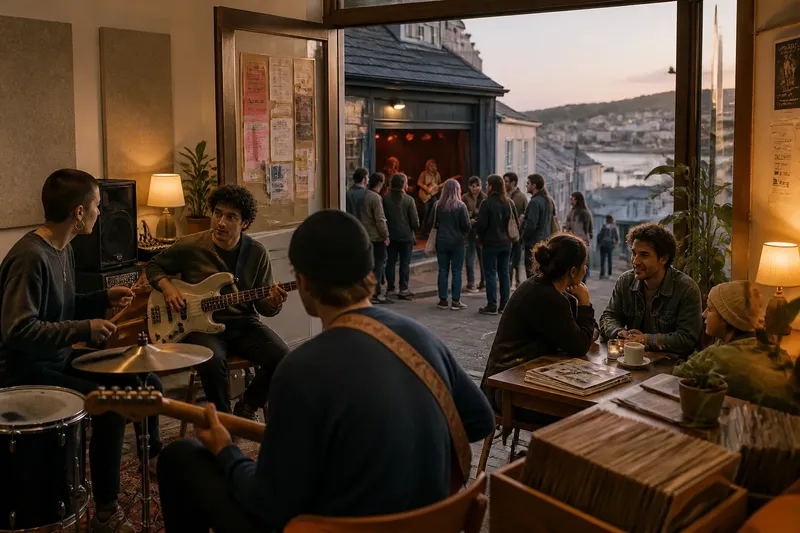
Music scenes grow around places because people need somewhere to meet again. A rehearsal room, small venue, café or community radio studio can bring musicians, listeners and organisers into regular contact. The sound matters, but a scene takes shape through the habits built around it.
What makes a music scene more than a genre?
A genre describes musical traits: the instruments, rhythms, production choices or vocal styles listeners may recognise. A scene describes a network of people and activity. Its members might share influences, but they also share rooms, local knowledge and reasons to keep showing up.
That distinction explains why a scene can contain sharply different music. A venue may book experimental electronic acts alongside punk bands because the same audience is curious, the same promoter handles both nights, or the same rehearsal space is available. The connection is social and practical, not necessarily audible.
Nor does a shared postcode automatically create a scene. People need ways to discover one another and chances to collaborate or attend. A cluster of musicians who never meet may be local in geography but not yet connected in practice.
Why do shared spaces matter so much?
Shared spaces lower the effort required to meet. A venue gives a band a stage and gives an audience a reason to gather. A rehearsal studio can put musicians in adjacent rooms. A community centre may host a night where performers and organisers learn one another’s names without needing a formal introduction.
Each space also supplies a different kind of contact. At a gig, people encounter the music together. In a practice room, musicians hear unfinished ideas and solve ordinary problems. In a café that hosts a listening event, a regular crowd may discuss records before anyone has formed a band. These encounters can turn a one-off visit into familiarity.
Spaces need not be permanent or glamorous. A recurring night in a borrowed hall can matter more than a polished room that rarely hosts local acts. What counts is whether people can return, participate and recognise the connections forming around them.
How do repeated encounters turn into local habits?
Repetition creates useful knowledge. Regulars learn which promoter books adventurous bills, who can lend a keyboard stand, and where a new act is likely to play next. They begin to pass information through ordinary conversation rather than relying on a central authority.
Small routines help hold a scene together: a monthly open-mic night, a shared rehearsal slot, a volunteer-run gig calendar, or a group that carries equipment after a show. None is dramatic alone. Together, such habits make participation easier and give people reasons to stay involved between releases.
Say a few musicians in a coastal town keep meeting at an all-ages hall after a monthly bill. One brings a drum machine, another invites a spoken-word performer to join a set, and a listener starts circulating the dates through a local arts newsletter. The observable result might be a mixed night that draws familiar faces and a few newcomers, giving the participants another occasion to meet. It would not prove that a durable scene has arrived; it would show how repeated contact can create one of its conditions.
Can a music scene exist without a permanent venue?
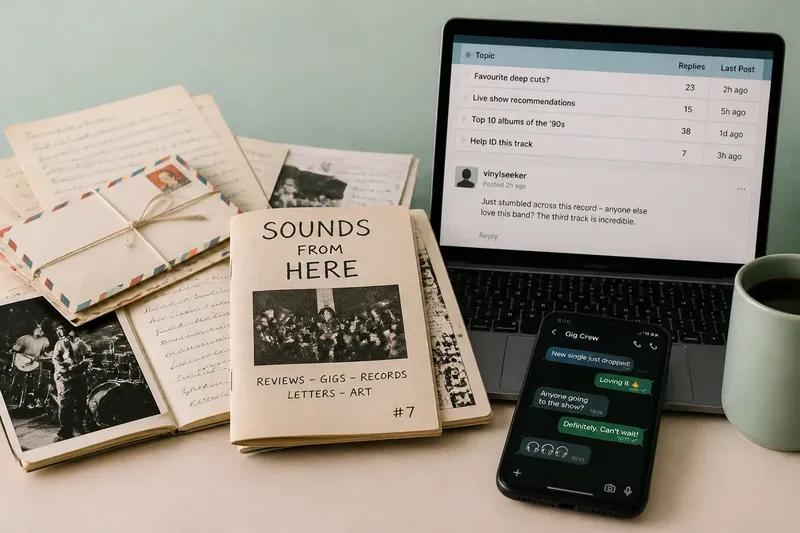
Yes. A scene can rely on rotating rooms, temporary licences, rehearsal spaces, homes or outdoor gatherings. It may also keep contact through group chats, mailing lists and local radio when people cannot meet in person. Those tools can help coordinate activity, but a message thread does not provide the same shared experience as hearing a set in the room.
When venues change, the scene’s relationships may travel with the people who made them. A promoter can move a night to a new bar; musicians can share a bill in a borrowed studio; listeners can follow the programme through a noticeboard or mailing list. The practical challenge is not simply finding another address. It is preserving the habits that helped people find and support one another.
Online spaces can also connect people who live far apart. That connection may be meaningful, but it does not automatically produce a local scene. The useful question is what the network enables: collaboration, shared listening, local events, or simply conversation. Different forms of connection serve different needs.
Who helps a scene keep going?
Musicians are visible, but a scene depends on more than performers. Promoters book rooms and assemble bills. Sound engineers make performances possible. Independent radio presenters, photographers, designers, record labels, venue staff and volunteer organisers help music reach an audience. Listeners contribute by attending, sharing information and welcoming people who have not yet found their place.
These roles need not be formal jobs. Someone who keeps a clear gig calendar or introduces two bands to a promoter can make the local network easier to use. Credit and access matter, too: if the same few people control every opportunity, newcomers may find the scene difficult to enter. A welcoming atmosphere is not a slogan; it shows up in who gets booked, who is treated respectfully and whether practical information is easy to find.
What should a newcomer look for in a music scene?
A newcomer can look beyond a venue’s name or a scene’s genre label. Notice whether events recur, how people hear about them, and whether the same organisers, performers or listeners turn up across different nights. Those links suggest a working network rather than a collection of unrelated gigs.
Practical access matters as much as atmosphere. Check whether event details explain how to attend, whether the room is accessible for your needs, and whether there is a clear way to ask an organiser a question. A friendly scene does not require instant familiarity; it makes the first visit manageable.
For instance, imagine you have moved to a town and found a community radio listing for a small venue’s mixed bill. You check the venue’s event page for the time, access information and ticket arrangements, then attend and notice that the same promoter has booked a local band you heard on the station. After the set, you ask where the next bill will be announced. The likely result is a concrete route to future events, whether or not you choose to speak with anyone else that evening.
How can I find local music beyond large venues?
Check community radio schedules, venue listings, arts-centre noticeboards and event posts from local promoters. Rehearsal studios and small cafés may also host public events, though their calendars can be informal.
Does a local scene need one recognisable sound?
No. A common audience, set of venues or network of organisers may connect artists whose music differs. Listen for recurring people and collaborations as well as recurring musical traits.
How can I support a scene without being a musician?
Attend a show, buy directly from an artist when that option is available, share accurate event details and treat venue staff and performers well. Turning up consistently is often more useful than announcing allegiance to a scene.
What if I feel like an outsider at a local gig?
Start with a public event and observe how the room works: where people queue, whether there is a quiet area and how the bill is organised. Asking a simple question of an organiser or another attendee can open a conversation without requiring instant familiarity.
Why do some scenes fade when a place changes?
Rent, licensing rules, transport and neighbourhood change can make familiar rooms harder to use. A venue closing may remove a stage, but also the informal meeting point where organisers found new acts and listeners learned about upcoming shows. The loss can therefore affect several parts of a network at once.
Scenes can adapt, though adaptation takes work. People may move events, create new partnerships or use online channels to keep a local calendar visible. If those changes preserve regular contact and give newcomers a way in, the scene can remain active even as its address changes. If activity depends on one room or one organiser, it can become fragile.
That is why music scenes grow around places as much as sounds: places make repeated encounters possible, while local habits turn those encounters into a network. To understand a scene, notice where people meet, how they hear about the next event and who helps make it happen. The answer may be less a genre name than a room with the lights on and a reason to return.