The Album-Listening Myth: There Is No Single Right Order
Album listening can mean following a track sequence, dipping into favourites or building a mood. Choose the approach that fits the attention you have.
Album listening does not require one prescribed order. You can follow the track sequence, begin with a favourite, or let a record accompany another activity; each approach gives you a different kind of attention. The useful question is not whether you are listening correctly, but what you want from the time you have.
The idea that a serious listener sits still, starts at the opening track and stays until the final note can make an album feel like an assignment. That format has its pleasures, but it is one option among several. A record can be a sequence, a collection of individual songs, or a sound that shares space with the rest of the day. Choosing deliberately makes those differences easier to hear.
What do you want from the album?
Start with the experience you want rather than an abstract rule about attention. Are you curious about how the songs connect? Do you want to hear a particular track again? Or would a steady musical backdrop make a routine task less monotonous? Your answer points towards a listening approach without making any of the others inferior.
This distinction matters because an album offers more than one route through its material. Track order can shape a sense of movement. Individual songs can stand apart from that sequence. Repeated listening may reveal details you missed the first time. None of these requires a solemn setting or a perfect stretch of free time.
When should you follow the track sequence?
Play the record from the opening track when the order itself interests you. This can suit an album whose songs seem to form a gradual change in tone, revisit a musical idea, or set up one another. You do not need to decide in advance that the sequence has a grand design. Simply hearing the songs in the order presented gives you a chance to notice whether one track changes how the next feels.
A full-sequence listen also gives you a useful first impression of pacing. An abrupt change may stand out. A quieter song might feel more vivid after a loud one. A closing track may leave a different impression because of what came before it. These are observations, not evidence of a single intended interpretation.
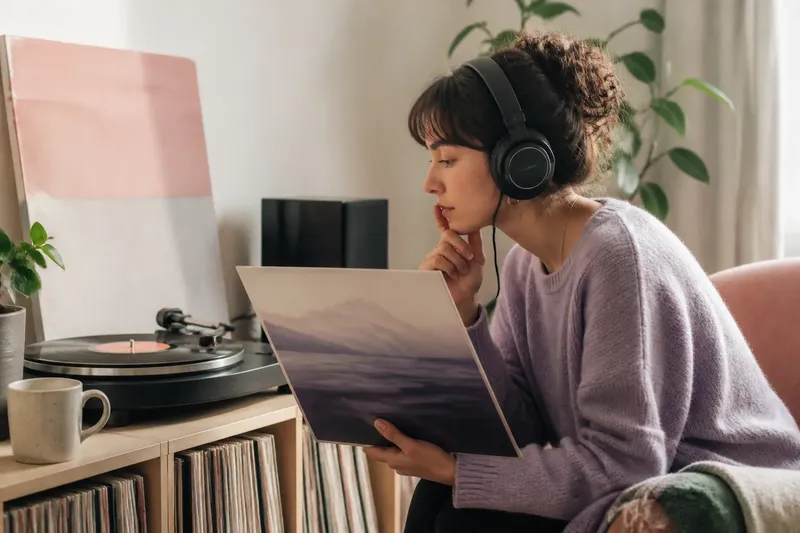
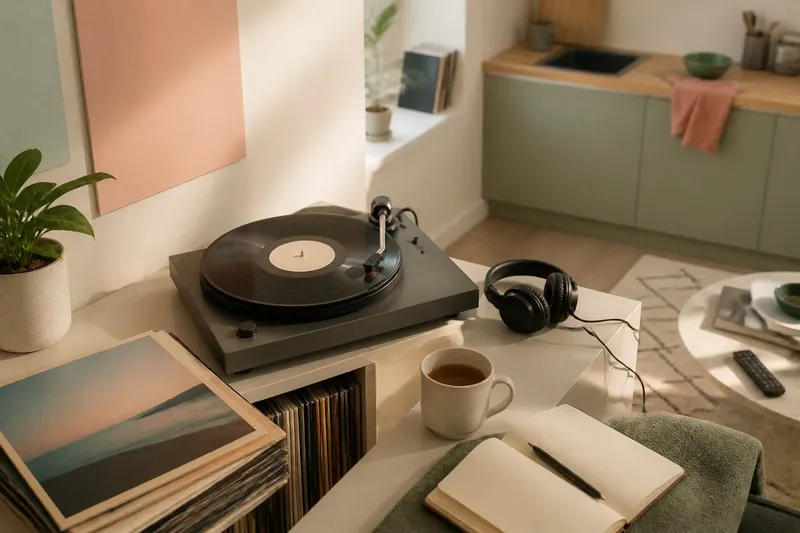
For this approach, give the music the clearest space you can comfortably manage. Headphones, speakers in a quiet room, or a record played while you sit with a cup of tea can all work. Put the phone out of reach if notifications are likely to pull you away. If you are interrupted, there is no need to restart; resume at a convenient point and let the experience remain imperfect.
Following the sequence can suit someone exploring an unfamiliar record, a listener curious about the pacing, or a fan who wants to revisit the whole rather than a handful of familiar tracks. It may not suit a day when you have only a few minutes or need music to recede behind another task. An album is not offended by a pause.
When is it better to choose individual tracks?
Start with the song you want to hear when a particular mood, sound or lyric has your attention. You can play it once, repeat it, or move to another track without completing the album. This approach suits listeners who already know the record, people exploring a playlist or library, and anyone whose available time comes in short stretches.
Choosing a track is not a lesser form of attention. It can be an attentive way to notice a vocal phrase, a drum pattern or a change in arrangement. Repetition is useful when you want to hear how a passage works, though you can also stop once the song has given you what you came for.
There is a trade-off: a track taken out of sequence loses the context of what precedes and follows it. That may not matter for the experience you want. If it does, you can listen to the neighbouring songs afterwards, or return to the full sequence another time. There is no requirement to turn a casual choice into a research project.
Say you have a short break and one song from an album has been circling in your head. You play that track, then listen to the following song because its opening catches your ear; the observable result is a brief, focused listen that may also give you a glimpse of the record’s flow. You can stop there without claiming to have heard the album as a whole.
What if you want music in the background?
Let the album accompany an ordinary activity when you want company rather than close analysis. Cooking, sorting laundry or travelling on a familiar route can leave enough room for the music to register without making it the main event. This is still listening. Attention can be partial and shifting; it does not have to remain fixed on the speakers.
Choose a record whose sound fits the task and the surroundings. Gentle or familiar music may be easier to leave in the background than a sequence you are keen to examine. If the music has lyrics you want to follow, a conversation or demanding task may compete for the same attention. You can lower the volume, pause playback or switch to something else without treating the choice as a failure.
Background listening has a different purpose from a focused session. It can give a routine task a tone or make a quiet space feel less empty. It is not the best way to catch every transition or production detail, and it need not be. When a moment does catch your ear, you can stop what you are doing and listen more closely, or simply let it pass.
How do you choose an album-listening approach?
Should I always listen to an album in order?
No. The sequence is useful when you want to hear pacing or connections between tracks, but it is not a test of attentiveness. Choose it when the order is part of what interests you.
Can I skip songs without missing the point?
Yes, if your aim is to hear particular tracks or enjoy a short selection. Skipping means you hear less of the album’s sequence, not that your listening is invalid.
Is background listening less attentive?
It involves a different kind of attention, often shared with a task. Use it when music is meant to accompany activity; switch to focused listening if you want to notice details.
What if I keep getting interrupted?
Pause and return when it suits you, or choose a single track for the time available. A broken session does not need to be restarted or completed in one sitting.
Can you move between approaches?
Yes. You might hear an album in sequence one evening, return to a favourite track on the bus, then put the same record on while cooking. Each pass answers a different question: how does the whole move, what does this song sound like on its own, or how does the music fit alongside a routine?
It can help to name the purpose before pressing play. “I want to hear the whole sequence” suggests starting at the beginning. “I want that chorus again” suggests choosing the song directly. “I want some company while I tidy” suggests letting an album run in the background. The wording is plain on purpose; listening needs no ceremonial language.
Technology makes these options easy to mix. A streaming app can jump to a track, queue a few songs or resume an album later. A compact disc or record may make sequence-based listening feel more natural, though you can still pause or choose another track. The format shapes what is convenient, not what counts as genuine attention.
There is no need to judge a session by how much of the album you completed. A single song can be enough for the moment; a whole sequence can be worthwhile when you have the time and curiosity. Album listening works best when the format matches the experience you want, rather than an imagined rule about what a proper fan ought to do.
Next time you reach for a record, choose the listening approach before you choose the device: sequence, song or soundtrack to an activity. That small distinction can make album listening feel less like homework and more like a deliberate use of your attention.